

Knowing how to shop smarter, store food properly, and turn simple ingredients into a meal can save money, reduce waste, and make life a whole lot easier. In our final episode of the season, we’re covering the basics of buying quality meat, making a hearty one-pot meal, and organizing your fridge like a pro. Chef Scott will show us how affordable cuts of meat can become delicious, budget-friendly meals, and Rachel shares practical tips for setting SMART goals that help turn good intentions into lasting habits.
Local Spotlight: Meat The Butcher
Local Spotlight: Jillian Fae Chef Services—budget butchery basics
In this episode’s Local Spotlight, we catch up with Chef Jillian Fae, chef & owner of Jillian Fae Chef Services, who shares one of the most budget-smart kitchen skills you can learn: breaking down a whole chicken. She walks us through a simple carving technique to turn one bird into multiple usable cuts, explains why buying whole saves money, and shows how to stretch it into a full week of meals.
Bonus: don’t toss the scraps — Jillian shows how to save bones and trimmings for a rich homemade broth that makes every dollar go further.
Adulting 101: Clean + Sanitize After Raw Chicken
Raw chicken is totally manageable — as long as you clean correctly afterward. Chef Jess shows the quick, safe way to sanitize your cutting board, tools, and workstation so you avoid cross-contamination.
You’ll learn what to wash first, what needs true sanitizing (not just soap), and how to reset your kitchen fast so it’s clean, safe, and ready for the next meal.
Kitchen Confidence: Turn Scraps Into Broth (Then Ramen!)
| ||
|

Eat Smart with Rachel: Build A Better Breakfast

Most of us are busy. It’s easy to run out the door with just coffee or an energy drink — maybe a banana or granola bar if we remember. But skipping breakfast (or grabbing something too small) can backfire.
Your brain needs nutrition to do its job. Without breakfast, it’s harder to concentrate, stay focused, and keep energy steady. Eating in the morning also helps prevent hitting lunch starving, overeating later, or defaulting to high-fat, high-calorie takeout. A balanced breakfast can even reduce afternoon cravings and that mid-day crash.
The key is balance: protein + carbohydrates + fiber. You’ll have more sustained energy throughout the day instead of roller coaster crashes.
Here are three quick, well-balanced breakfasts that won’t slow you down:
1) Yogurt Parfait
Layer fruit (berries, peaches, apples — whatever’s in season) with a high-protein plain yogurt or cottage cheese. Top with low-sugar granola and nuts.
Tip: Canned fruit in juice or frozen fruit (mango, pineapple, berries) works great and keeps sugar lower.
2) Savory Oatmeal
Cook plain oats in bone broth instead of water for extra protein and flavor. Add an egg on top and finish with seasonings.
Tip: Everything Bagel seasoning, chili crisp, green onions, or a drizzle of toasted sesame oil keeps it interesting.
3) Breakfast Burrito
Use a whole-grain tortilla and fill with scrambled eggs, lean breakfast sausage, cheese, and beans. Add veggies like broccoli, bell peppers, onions, or mushrooms.
Tip: Freeze a batch: wrap each burrito in parchment, then foil or plastic. To reheat, remove foil/plastic and microwave in the parchment — it steams the burrito perfectly.
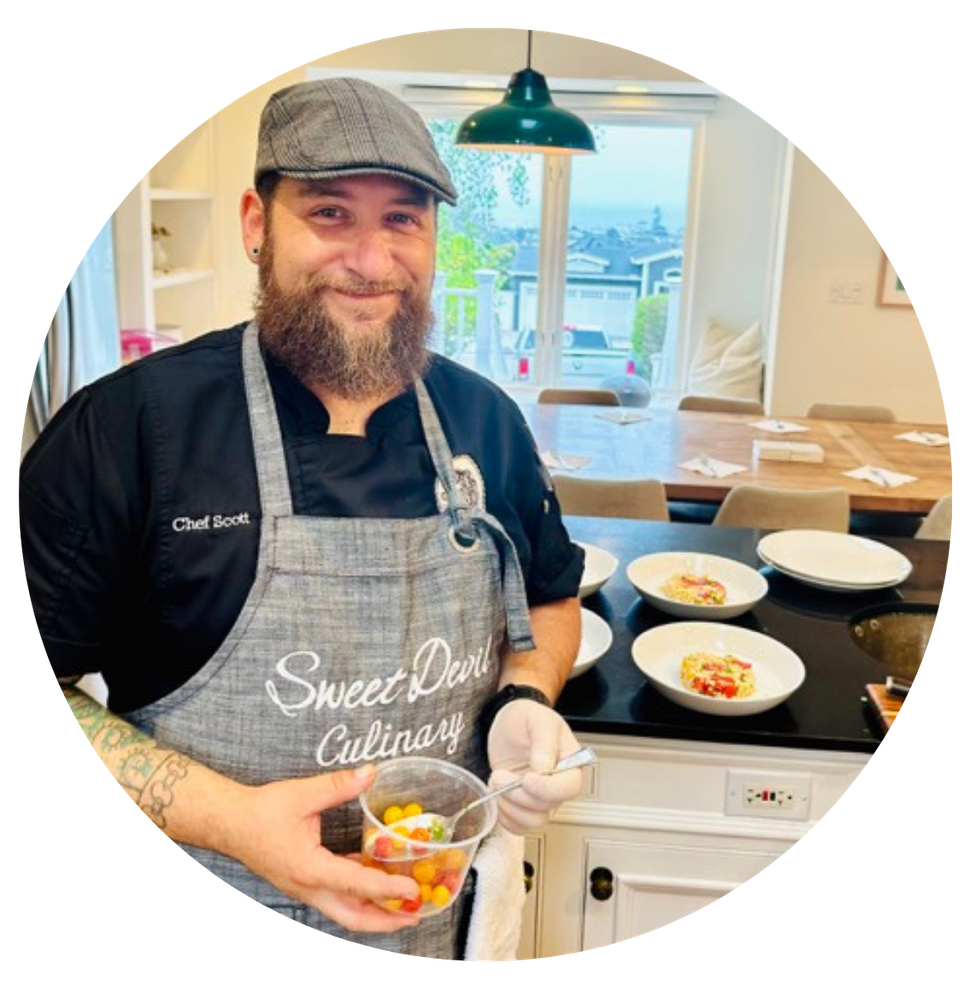
Cook Smart with Chef Scott: Ramen Glow-up
Instant ramen is the culinary equivalent of a blank canvas: humble, inexpensive, and full of untapped potential. While the seasoning packets tend to be salt bombs and the noodles lack nutrition on their own, a few smart tweaks can turn that 25-cent square into a balanced, comforting bowl worthy of a chef’s signature. Here’s how to do it.
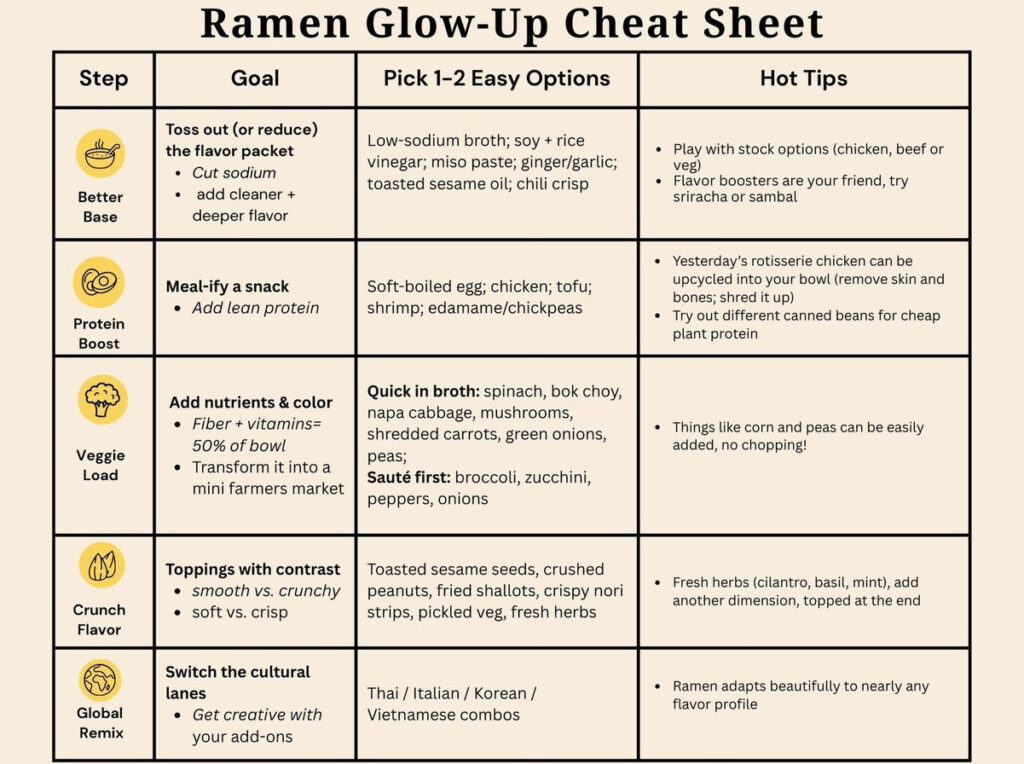
Thai-inspired: Coconut milk + lime juice + chili + cilantro
Italian twist: Broth + sautéed garlic + tomatoes + spinach + parmesan
Korean style: Gochujang + kimchi + scallions + soft egg
Vietnamese vibe: Broth with fish sauce + lime + bean sprouts + basil
In the End…
Doctoring up store-bought ramen is less about following a recipe and more about thinking like a chef: build layers of flavor, create balance, play with color and texture, and elevate the humble into the memorable. With a few thoughtful additions, that little noodle brick becomes a canvas for creativity—and a surprisingly healthy, satisfying meal.
SD Culinary Connections: Spring enrollment-date refresh
Thinking about culinary school or job training? Here are a few great local options:
Kitchens For Good
Tuition-free culinary training in San Diego for adults 18+ facing barriers to employment. Want to join the next cohort? – See if you qualify! Learn More Here!
Community College Culinary Programs:
Explore affordable culinary education at local San Diego colleges. In addition to degree programs, many offer extended and continuing education classes — some free or low-cost — so you can build skills at your own pace.
- Train in a student-run restaurant and earn certificates or an AS degree in Culinary Arts, Baking & Pastry, or Culinary Management.
- Learn from instructors who are seasoned professionals — gain foundational skills through hands-on classes, field trips, and guest chef appearances.
- Build both cooking and baking skills through career-focused certificate and degree programs that also cover food handling, ingredient function, and kitchen teamwork.
Ever stood in front of the meat case wondering what you’re actually looking at?
Your local butcher is more than someone who sells meat—they’re basically a meat librarian. Whether you’re looking for a budget-friendly cut, planning a special meal, or have no idea what to buy, they can help point you in the right direction.
In this interview with Rick The Butcher from Frazier Farms, we chat about finding quality meat, understanding beef grades, and choosing beginner-friendly cuts with confidence.
Adulting Takeaway: Learning to ask questions is one of the most underrated adulting skills.

Adulting 101: How To Stock Your Fridge
A well-organized fridge helps food last longer and keeps money from ending up in the trash.
Learn where different foods belong, how to store herbs and vegetables properly, and why shelf placement matters for food safety. We’ll cover simple habits like rotating older foods forward, storing proteins correctly, and regularly cleaning shelves to prevent waste. Small changes in organization can make a big difference in how long your groceries last.
Adulting Takeaway: The best way to save money on groceries is often using what you already have before it goes bad.
Let’s unlock the ultimate condiment cheat for building a budget-friendly kitchen that actually works. With just a few essentials, you can turn simple ingredients into quick, flavorful meals without extra shopping. It’s all about working smarter, not harder, when it comes to everyday cooking.
Kitchen Confidence: One Pot Wonder Beef Stew
Comfort food doesn’t have to be complicated.
This hearty beef stew combines simple ingredients like potatoes, carrots, tomatoes, broth, herbs, and beef into one easy meal. Using a slow cooker or crockpot, you’ll learn how to let time do most of the work while building rich flavor from affordable ingredients. It’s a great recipe for meal prep, leftovers, and busy schedules because everything cooks together in one pot.
Adulting Takeaway: One-pot meals save time, create less cleanup, and stretch your grocery budget across multiple meals.

Eat Smart With Rachel: Setting SMART Goals

It can be challenging to make changes in our lifestyle habits such as eating healthier or figuring out an exercise routine. Instead of trying to make all the changes all at once, it’s more important to build sustainable habits by making small changes gradually. Try to think about setting SMART Goals.
Example: “I want to start eating healthier” is a broad goal. Break it down into steps.
Specific: I want to start adding more fresh fruit to my food choices.
Measurable: I plan to add 1 cup fresh or frozen fruit at least 4 out of 7 days of the week.
Realistic: I can grab pre-cut fruit if I don’t have time or something easy to grab like a banana or apple.
Time sensitive: In 3-4 weeks I want to be more consistent with my intake of fresh fruit.
SMART Goals can apply to anything that you are working to improve on. By measuring your progress, you can build healthier habits gradually instead of feeling stressed and pressured to do it all. Try writing down a SMART Goal for something you want to achieve and put it somewhere you can see everyday such as in the fridge or a journal. Think about who your support system is that can help you achieve your goals and can cheer you on.
Tip:
Try to limit foods high in saturated fat, especially from animal sources, as too much can impact heart health.
Cook Smart With Chef Scott: Cooking More for Less
Cheaper cuts of meat offer a budget-friendly and flavorful option for home cooks who want to enjoy hearty meals without overspending. These cuts, often tougher due to more connective tissue, benefit from slow cooking methods that tenderize the meat and enhance its rich flavors. With some creativity and patience, they can be transformed into dishes that rival those made with premium cuts.
One advantage of cheaper cuts is their affordability, making them accessible for families or individuals looking to stretch their grocery budget. Additionally, these cuts often have more fat and marbling, which contributes to a deeper taste and juicy texture when cooked properly. Popular cooking techniques for cheaper cuts include braising, slow roasting, stewing, and grilling after marinating. For example, beef chuck roast can be slow-cooked in a stew with vegetables, resulting in tender meat infused with savory broth. Pork shoulder, when cooked low and slow, becomes tender enough to shred for pulled pork sandwiches that are both economical and satisfying.
Recipe ideas include:
- Beef Chuck Pot Roast: Slow-cooked with carrots, onions, potatoes, and herbs in a savory broth
until the meat is tender and falling apart.
- Pulled Pork: Pork shoulder slow-roasted with barbecue spices, then shredded and served on buns
with coleslaw.
- Chicken Thigh Curry: Affordable chicken thighs simmered in a flavorful curry sauce with
coconut milk and spices, served over rice.
- Ground Meat: Use what you prefer to add into Stir Fry, Fried Rice, Pasta Dishes, Casseroles.
By embracing these lesser-known cuts and cooking methods, home cooks can prepare delicious, wholesome meals that are both economical and satisfying. This approach not only saves money, but also encourages culinary creativity and a deeper appreciation for diverse meat cuts. These meals often yield larger amounts so there will be leftovers that can be used for additional meals or turned into other meals throughout your week.
SD Culinary Connections: Spring enrollment-date refresh
Thinking about culinary school or job training? Here are a few great local options:
Thinking about culinary school or job training?
Here are a few great local options:
Community College Culinary Programs:
Explore affordable culinary education at local San Diego colleges. In addition to degree programs, many offer extended and continuing education classes — some free or low-cost — so you can build skills at your own pace.
Mesa College – Ongoing open enrollment for Fall 2026, semester begins 8/24/26.
Grossmont College – Fall 2026 registration is open until 8/23/26.
Southwestern College – Ongoing open enrollment for Fall 2026, semester begins 8/24/26.
Kitchens For Good
Tuition-free culinary training in San Diego for adults 18+ facing barriers to employment. Want to join the next cohort? – See if you qualify! Learn More Here!
Chef Angels alumni can request a direct referral to Kitchens For Good — email info@chefangels.org to get started.